
Common Mistakes That Fail 90% of Loksewa Adhikrit Level Aspirants (And How to Avoid Them)
The common Loksewa Adhikrit preparation mistakes that hold candidates back, plus practical fixes for syllabus study, MCQs, writing, and interviews.
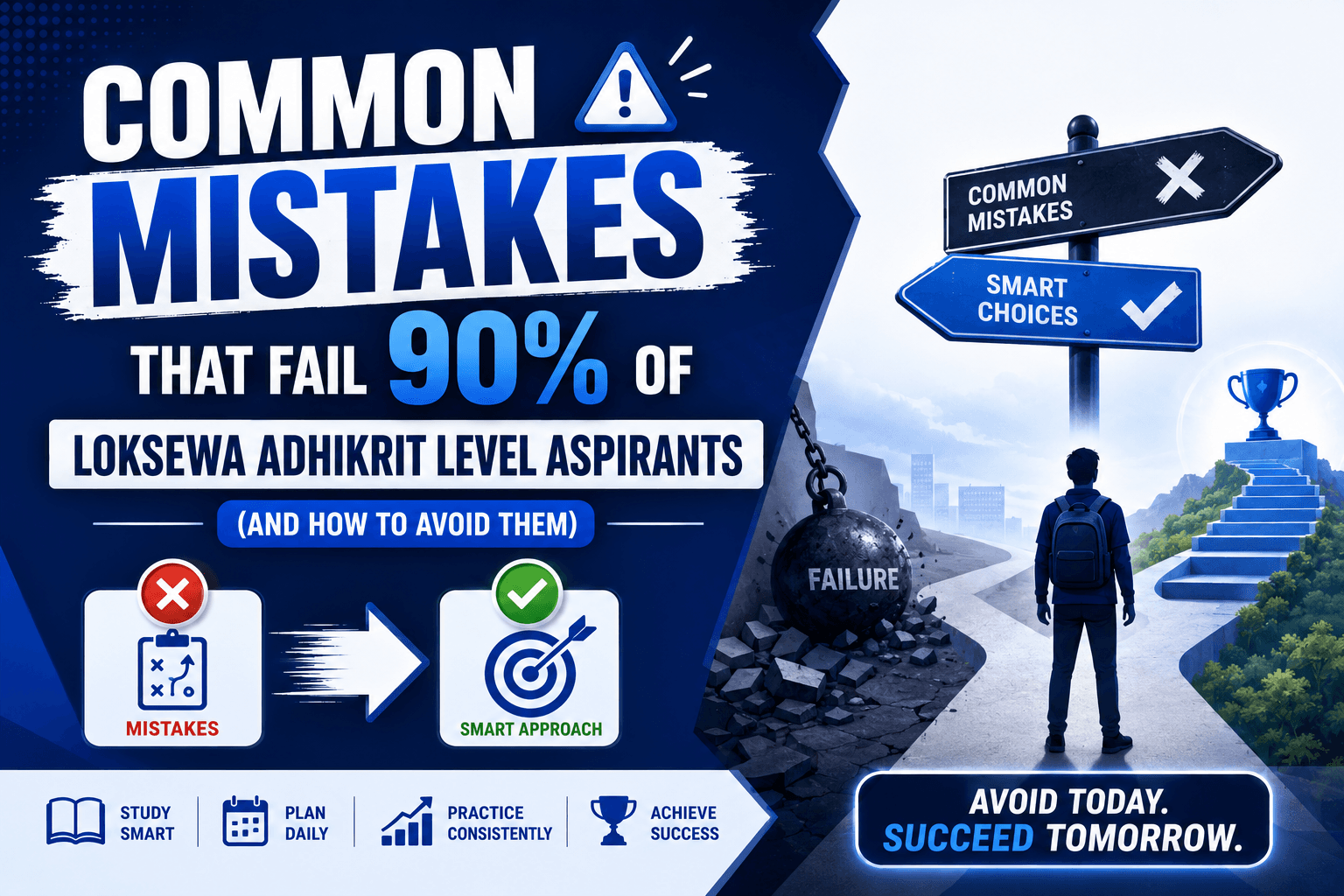
Every year, thousands of Nepali graduates prepare for the Loksewa Adhikrit exam with serious effort. Many study for months, sacrifice personal time, and still fall short. The painful part is that a large number of candidates do not fail because they lack intelligence. They fail because their preparation has avoidable gaps.
This guide explains the common Loksewa Adhikrit preparation mistakes and how to correct them before exam day.
1. Ignoring the Latest Syllabus and Exam Structure
Some candidates begin with old notes, random guidebooks, or advice from friends without checking the current syllabus. That is risky. The exam pattern, marks distribution, and stage requirements should shape your whole plan.
How to Fix It
Download the latest official syllabus from Lok Sewa Aayog before you start. Print it or keep a digital checklist. Every study session should connect to a syllabus point.
2. Treating the Objective Paper Too Lightly
The objective paper is not a formality. It filters candidates early. If your MCQ accuracy is weak, you may not reach the descriptive stage even if your writing is strong.
How to Fix It
Dedicate regular time to MCQs. Practise Nepal's constitution, governance, general knowledge, current affairs, IQ, and public administration basics. Review wrong answers carefully instead of only counting your score.
3. Delaying Answer Writing Practice
Many candidates read a lot but write very little. In the exam, knowledge must become a clear, structured answer within a limited time.
How to Fix It
Write at least one answer daily. Use a simple structure: introduction, main points, examples, and conclusion. Practise under time limits and ask teachers, seniors, or peers to review your writing.
4. Memorizing the Constitution Without Understanding It
For Adhikrit level, Nepal's Constitution, federal governance, civil service, and public policy are core areas. Memorizing articles without understanding their administrative meaning is not enough.
How to Fix It
Study provisions with examples. Ask how each article affects service delivery, local government, rights, accountability, and development planning.
5. Studying Without a Time-Bound Plan
Motivation is useful, but it fades. A broad syllabus needs a weekly plan. Without one, candidates spend too much time on comfortable topics and avoid weak areas.
How to Fix It
Build a three-phase plan:
- Phase 1: syllabus coverage
- Phase 2: revision and practice
- Phase 3: mock tests, answer writing, and interview preparation
Track progress every week.
6. Underestimating the Final Stage
The interview, group test, and skill-related stages require communication, confidence, and judgment. Candidates who prepare only for written papers may struggle later.
How to Fix It
Start speaking practice early. Prepare answers about your motivation for public service, Nepal's development challenges, ethical decisions, and administrative scenarios.
7. Depending on One Study Source
One guidebook is rarely enough. Some materials are outdated or too shallow for officer-level preparation.
How to Fix It
Use guidebooks for structure, but verify important points with official documents, PSC publications, the Constitution, government acts, and quality newspapers.
8. Ignoring Health and Energy
Loksewa preparation is a long race. Poor sleep, no exercise, and constant stress reduce memory and focus.
How to Fix It
Sleep properly, move your body, take planned breaks, and keep your routine sustainable. A tired mind cannot perform consistently.
Final Thoughts
The Loksewa Adhikrit exam is difficult, but it is not mysterious. Candidates improve when they study the right syllabus, practise MCQs, write daily, revise weak areas, and prepare for the final stage with maturity.
Avoid the common mistakes. Build a plan. Review honestly. Serve with purpose.
Continue With Structured Preparation
If this article matches what you are working on, the next step is to compare the relevant academy program and talk with the team about the right batch or track.
Line Academy Editorial
Career Coaches
Line Academy's editorial team provides strategic guidance for competitive exams in Nepal.
Table of Contents
Related Program
Jump from this article into the matching program page to compare courses, outcomes, and enrollment options.
Loksewa PreparationTalk to an AdvisorRelated Articles
Continue exploring our educational insights
1 Month Study Plan for Loksewa Engineering (Civil Engineering Edition)
A four-week Loksewa civil engineering study plan for PSC civil engineering, NEA Level 7, technical subjects, GK, IQ, and mock revision.
Complete Guide to Loksewa Civil Engineering Preparation in Nepal
A complete Loksewa civil engineering preparation guide covering syllabus areas, MCQ practice, writing skills, GK, IQ, and coaching support.
Parkinson's Law: How to Manage Time Effectively in Exams
Learn how Parkinson's Law affects exam preparation and how students can use mini-deadlines, question timing, and mock practice to stay in control.
Ready to Start Your Learning Journey?
Explore our comprehensive courses and take the first step towards achieving your academic and career goals.